No products in the cart.

Medical Hair Support

Physician-guided oral medications and targeted supplementation—designed to stabilize hair loss, protect existing density, and restore stronger growth from within. Hair loss is often approached as something external—treated with devices, injections, or topical products. But in many patients, the most important changes are happening internally. Hormonal signaling, follicular sensitivity, inflammation, and nutrient status all influence how …

What Is Medical Hair Support?

Medical hair support refers to the use of prescription oral medications and clinically relevant supplementation to regulate the hair growth cycle and stabilize ongoing loss.

This approach is designed to:

  • Slow or stop progressive thinning
  • Preserve existing follicles
  • Improve hair thickness and consistency
  • Support long-term, sustainable regrowth

For many patients, this is the difference between temporary improvement and lasting results.

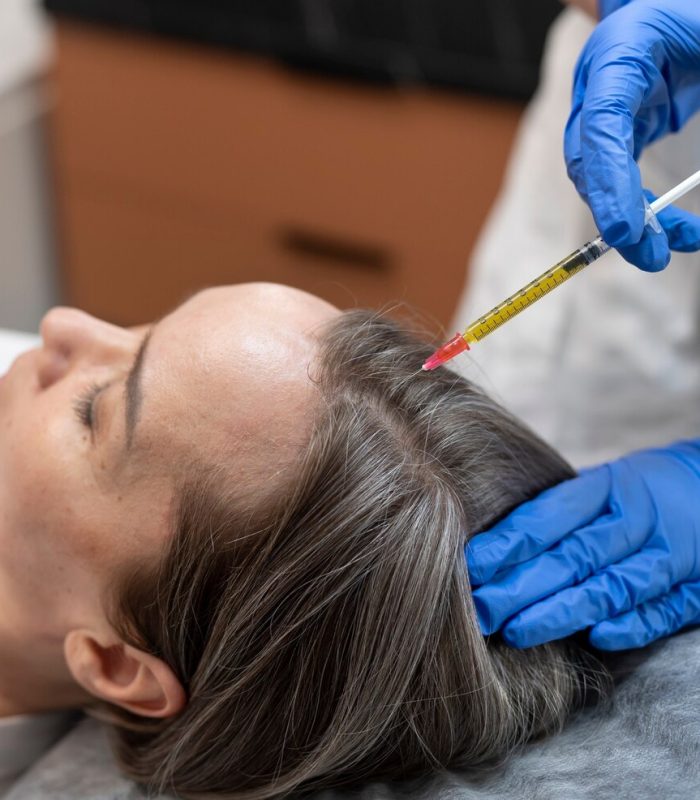
high-angle-patient-getting-prp-injection-alopecia_23-2149341421

What topical treatments are available for thinning hair?

There are a number of topical treatments on the market which claim to mitigate the effects of thinning hair, including Minoxidil, collagen based shampoos, and Rene Furterer products.

Minoxidil

Minoxidil is an antihypertensive vasodilator treatment that is applied topically to the scalp in order to treat hair loss, particularly that caused by male pattern baldness. However, it is not effective in treating receding hairlines. Rogaine is a well-known topical treatment that contains Minoxidil.

Rene Furterer products

Rene Furterer is a natural hair care line that offers products designed to target various hair concerns. Their thinning hair collection works to improve scalp health and stimulate hair growth. It is comprised of four products: Triphasic VHT, a regenerating treatment, Forticea, a stimulating shampoo, Complexe 5, a weekly scalp treatment, and Vitalfan, a dietary supplement with key ingredients such as Vitamins A and E and Biotin.

Although thinning hair is a common condition, it can have a devastating impact on your self-esteem.

The Core Medications We Use

Hair loss is not one condition—it’s a biological process influenced by multiple factors. Treatment is selected based on your pattern, stage, and underlying drivers.

Oral Minoxidil

A low-dose oral medication widely used in modern hair restoration.

How it works:
Improves blood flow to the follicle and prolongs the growth (anagen) phase.

Why it matters:
Helps stimulate weaker follicles to produce thicker, longer strands over time.

What to expect early on:
Some patients experience a temporary increase in shedding during the first few weeks. This is often a sign that the hair cycle is resetting into a stronger growth phase.

Finasteride (for appropriate patients)

A well-established treatment primarily used in men, and selectively in women under medical guidance.

How it works:
Blocks the conversion of testosterone into DHT (dihydrotestosterone), the hormone responsible for follicle miniaturization.

Why it matters:
Helps slow or stop ongoing hair loss and preserve density.

Spironolactone (commonly used in women)

A widely used anti-androgen medication for female hair loss.

How it works:
Reduces the effect of androgen hormones on the follicle.

Why it matters:
Helps stabilize shedding and supports regrowth in hormonally driven thinning.

Reassurance:
This medication has been used safely for many years in women for hormonal conditions. When appropriately prescribed and monitored, it is generally well tolerated.

Dutasteride (select cases)

A more potent DHT blocker used in carefully selected patients.

How it works:
Targets multiple pathways involved in DHT production.

Why it matters:
Can be effective in more resistant or advanced cases.

What oral supplements are available for thinning hair?

There are a number of oral supplements that work to stimulate hair growth, including Biotin, Selenium, Nutrafol, Vitamin A, Cercumin, Vitamin B3, B12, B5, Zinc, Omega 3, Vitamin C, ASA 81 mg, and Vitamin D.

The benefits of each supplement are outlined below.

Biotin and other vitamin blends

Since hair loss is an indication of a biotin deficiency, biotin is an effective oral supplement to encourage hair growth. It helps to strengthen your hair by repairing hair shingles that are naturally damaged overtime as a result of environmental factors, hair care, and styling products.

Selenium

This mineral nutrient has a number of benefits including hair loss prevention. Selenium encourages hair growth by weakening free radicals in the body that damage hair follicles.

Nutrafol

Nutrafol is a hair-thinning supplement comprised of 20 natural ingredients, such as Vitamin C, Hydrolyzed Marine Collagen, and Hyaluronic Acid. It works to strengthen weakened hair follicles and is formulated to take into account the various factors of hair loss including stress, aging, hormonal imbalances, and inflammation.

Viviscal

Viviscal is a hair growth supplement which contains Biotin, Vitamin C, and Iron, which are all recognized as natural hair growth stimulants. However, its main ingredient is AminoMar®, an exclusive marine complex, made up of Silica and Horsetail (stem) extract, which nourishes tresses to encourage hair growth.

Vitamin A

Also referred to as retinol, Vitamin A’s ability to encourage sebum secretion helps to prevent hair damage, which makes it an effective supplement for individuals experiencing hair loss.

Cercumin

Cercumin, which comes from the ginger family, is touted for its ability to prompt hair growth. While there is little evidence to suggest that it makes hair grow, it can prevent the inflammation of hair follicles, due to its anti-inflammatory ingredients.

Vitamin B3, B12, B5

B-complex vitamins that include B-3 (niacin), B-5 (pantothenic acid) and B-12 (cobalamin), are known for their ability to regulate the nervous system, however, they also play an important role in maintaining healthy skin and hair. B-12 in particular is credited for its ability to strengthen and soften weakened hair.

Zinc

Zinc supports healthy hair by improving hair follicle health and preventing the loss of hair follicles. Conversely, a deficiency of zinc can weaken the hair follicle’s protein structure.

Omega 3 from fish oils

Omega 3 is one of the most effective vitamins for hair growth due to its ability to minimize scalp inflammation, which is one of the causes of hair loss. In addition, the fatty acids in omega 3 nurture and moisturize hair, resulting in thicker, healthier locks.

Vitamin C

As a result of the natural aging process, your cellular structures become damaged over time and the antioxidative enzymes that work to preserve your body dwindle, which results in hair loss and causes your hair to turn gray. Vitamin C works to counter these effects by fighting oxidative stress, thereby minimizing hair loss and delaying hair graying.

ASA 81 mg

While most people think of ASA, or Aspirin, as a pain relief medication, it is also now recognized for its ability to improve the appearance of hair. The salicylic acid in Aspirin helps restore hair’s shine while its ability to inhibit prostaglandin may prevent hair loss.

Vitamin D

Alopecia, or spot baldness, has been directly linked to a Vitamin D deficiency. As such, experts suggest that in addition to improving the condition of your skin and bones, Vitamin D supplements can encourage hair growth, by triggering the development of new hair follicles.

Targeted Vitamins & Nutritional Support

Supplementation is not a blanket recommendation. At LipDoctor, it is used strategically—only when clinically relevant.

Where appropriate, we may recommend targeted bloodwork to identify deficiencies contributing to hair loss.

Iron (when deficient)

Supports oxygen delivery to the follicle and proper growth cycles.

Vitamin D

Helps regulate follicle activity and hair cycling.

Biotin (Vitamin B7)

Supports keratin production when deficiency is present.

Zinc

Supports follicle repair and helps regulate inflammation.

Marine Collagen / Amino Acids

Provide the structural building blocks needed for stronger hair.

Saw Palmetto (select cases)

Offers mild support for DHT modulation when prescription therapy is not used.

Supplementation supports treatment—but does not replace medical therapy when hormonal or genetic hair loss is present.

What prescription medications are available for thinning hair?

Propecia, also known as finasteride, is a medication that can be prescribed to treat male pattern baldness. It slows hair loss by ensuring that the body’s testosterone is not converted to dihydrotestosterone (DHT). Since DHT is a known cause of androgenic alopecia, Propecia has been proven effective in preventing hair loss and stimulating hair growth. However, this medication is not suitable for pregnant women or women who are of child rearing age, as it can cause birth defects.

Why should I consider hair transplants for my thinning hair?

While many of the oral and topical treatments listed above can be effective in strengthening hair and encouraging hair growth, they are all temporary solutions; if their use is discontinued, your hair will return to its previous state. Hair grafting or hair transplants are the only permanent solutions for thinning hair. Their benefits and drawbacks are outlined below.

Strip transplant

The Follicular Unit Strip (FUS) is a hair transplant method that involves removing follicular units from a donor site, where hair growth is plentiful, and transplanting it to the areas where hair is thinning. This procedure requires a strip of skin to be removed from the donor area, which results in scarring where the incision was made. Although this technique is more invasive than the alternative, Follicular Unit Extraction, it is less expensive as it does not require grafts to be removed individually so the procedure itself is not as painstaking.

FUE

Follicular Unit Extraction (FUE), or hair harvesting, is an innovative hair transplant treatment. During this procedure, hair follicles are carefully extracted from a donor site, typically at the back or sides of your head, and relocated to the area of concern, typically at the front of the head. The follicles are individually grafted into the scalp and consequently, naturally blend in and effectively restore your receding hairline.

This incredibly effective procedure is less invasive than the FUS method and consequently does not result in scarring. However, it requires patience, as the results may not be visible for 9-12 months after the procedure.

Contact Us

Who Is This For?

Medical therapy is often the most important step for:

  • Women with diffuse thinning or hormonal hair loss
  • Men with early pattern hair loss
  • Patients experiencing increased shedding
  • Postpartum or stress-related changes
  • Perimenopausal and menopausal patients
  • Patients undergoing treatments like Alma TED™ who want stronger, more consistent results

Younger patients noticing early changes benefit most—before follicles become less responsive.

How It Works—At a Biological Level

Hair follicles cycle through growth, transition, and rest phases. In hair loss:

  • Growth phases shorten
  • Resting phases lengthen
  • Follicles gradually miniaturize

Medical therapy works by:

  • Extending the growth phase
  • Reducing hormonal disruption (DHT sensitivity)
  • Improving blood flow and nutrient delivery
  • Stabilizing the follicular environment

The goal is not short-term stimulation—but restoring a more stable, productive growth cycle.

What Results Can You Expect?

Consistency is critical. These therapies work gradually—but meaningfully.

  • Weeks 4–8: Reduced shedding
  • Months 2–4: Stabilization of hair loss
  • Months 3–6: Early regrowth and improved hair quality
  • Beyond 6 months: Noticeable improvement in density and strength

Results build over time. This is a structured, long-term approach—not an immediate fix.

Our Approach to Dosing and Personalization

There is no one-size-fits-all protocol.

We typically begin with low, well-tolerated doses and adjust gradually based on your response, goals, and comfort level. This allows us to maximize results while minimizing unnecessary risk.

Your treatment is continuously refined—not fixed.

A Layered Approach to Hair Restoration

Oral medications and supplementation are often combined with in-clinic treatments such as Alma TED™.

  • Medical therapy = internal stabilization
  • In-clinic treatments = external stimulation

Together, they create a more complete and effective strategy.

Frequently Asked Questions

Yes, when prescribed and monitored appropriately. We tailor treatment to your medical history and risk profile.

In most cases, yes. Hair loss is progressive, and ongoing therapy helps maintain results.

Side effects are possible but not common for most patients. We review these in detail and adjust treatment if needed.

Vitamins can help when deficiencies are present, but they are rarely sufficient on their own for hormonal or genetic hair loss.

Yes. Many of these therapies are specifically used to treat female hair loss and are carefully tailored to each patient.

For some patients, yes. For others, combining medical therapy with treatments like Alma TED™ produces stronger, more consistent outcomes.

Book Your Consultation

If you’re noticing increased shedding, thinning, or subtle changes in your hair, this is the right time to assess it properly.

At LipDoctor, we take a physician-led, individualized approach to hair restoration—combining medical therapy, advanced technology, and long-term strategy to create results that are both visible and sustainable.

We accept a limited number of patients each month to ensure a personalized and thoughtful experience.

Call the clinic or email us to schedule your consultation.
Because restoring your hair isn’t about trying everything—it’s about choosing what works, at the right time, for you.

BOOK YOUR FREE CONSULT